Basil Pesto
The story
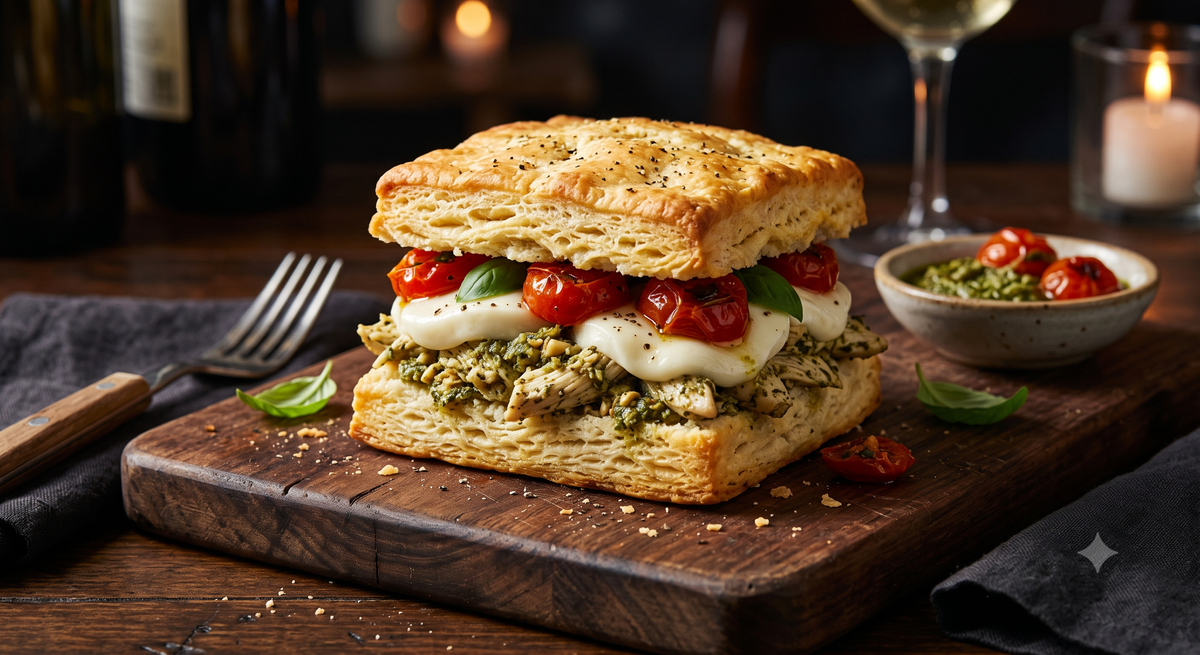
This is the fastest build on the menu and one of the best, which is an annoying combination if you have been telling yourself good food takes time. Grilled chicken, a pesto made in ninety seconds, shaved parmesan, and a few blistered tomatoes on a warm District Biscuit. Twenty minutes, one pan, almost no cleanup.
Pesto is oil-based, which is the specific thing that destroys sandwich bread. Oil does not sit on a surface, it migrates through it, and by the time you finish a pesto sandwich on ciabatta you are holding something translucent. The District Biscuit is already a butter-laminated product, so oil is not an invader here. The crisp edges stay crisp because they are built from fat, and the flaky layers take the pesto in as flavor rather than damage.
That is the culinary canvas at its most restrained. No sauce to reduce, no glaze to time, no crust to protect. Just green, garlicky, sharp, and buttery, on a weeknight when nobody has the energy for anything more.
Why you'll love it
- Twenty minutes start to finish, which makes it the fastest build in the Studio.
- Fresh pesto takes ninety seconds in a food processor and tastes nothing like the jar.
- The District Biscuit is butter-based, so pesto oil enhances it instead of ruining it.
- Works hot or at room temperature, which makes it a genuinely good picnic sandwich.
- Uses one pan and produces almost no cleanup.
Ingredients
- 4 District Biscuits, warmed and split
- 1.5 lb boneless skinless chicken breast, sliced into cutlets
- 2 packed cups fresh basil leaves
- 1/3 cup pine nuts, toasted, or walnuts
- 2 cloves garlic and 1/2 cup grated parmesan
- 1/2 cup extra virgin olive oil, plus 1 tbsp for the pan
- Juice of half a lemon
- 1 cup cherry tomatoes
- Shaved parmesan and fresh basil leaves to finish
- Salt and black pepper
How to build it
-
1
Combine the basil, toasted pine nuts, garlic, grated parmesan, lemon juice, and a good pinch of salt in a food processor and pulse until roughly chopped.
-
2
With the motor running, stream in the olive oil until the pesto comes together but still has visible texture, then taste and adjust salt.
-
3
Pat the chicken cutlets dry and season both sides generously with salt and black pepper.
-
4
Heat 1 tbsp olive oil in a skillet over medium-high and sear the cutlets 4 minutes per side until golden and cooked through, then move them to a plate to rest.
-
5
Add the cherry tomatoes to the same pan and blister them for 2 minutes until the skins split and they collapse slightly.
-
6
Warm the District Biscuits in a 350F oven for 5 minutes and split them so the flaky layers are open.
-
7
Spread pesto generously on both cut faces of every biscuit, going heavier than feels reasonable since the chicken is unsauced.
-
8
Layer the sliced chicken, blistered tomatoes, shaved parmesan, and fresh basil leaves, cap, and serve warm or at room temperature.
Pro tips & swaps
- Toast the pine nuts in a dry pan for 3 minutes first. Untoasted nuts make pesto taste raw and slightly bitter.
- Pulse, do not puree. Pesto with visible texture tastes brighter and clings better than a smooth paste.
- Pesto on both biscuit faces, not one. The chicken carries no sauce of its own and needs the coverage.
- Swap the pine nuts for walnuts or sunflower seeds, both of which are cheaper and work nearly as well.
- Pesto keeps 5 days under a thin layer of olive oil, or freeze it in an ice cube tray for months of instant dinners.
Put this on your menu
District Biscuit ships frozen, 60 biscuits to a case, and bakes from frozen in 22 to 24 minutes. Order it through US Foods, Baldor, Omaha Beef Co., MDI or Saval Foodservice.
Frequently asked questions
Can I make the Basil Pesto Biscuit ahead of time?
Yes, more than most. Pesto keeps 5 days refrigerated under olive oil or freezes for months, and the chicken can be cooked 3 days ahead. This is also one of the few builds that eats well at room temperature, which makes it good picnic food.
What's the best biscuit to use for a pesto sandwich?
A flaky, butter-laminated biscuit like a District Biscuit is ideal because pesto is oil-based and oil migrates through ordinary bread. The District Biscuit's own butter content means the oil reads as richness rather than sogginess.
Can I substitute the chicken in this recipe?
Yes. Grilled shrimp, sliced steak, fresh mozzarella, or thick planks of grilled zucchini all work with the same pesto. Mozzarella and tomato alone makes an excellent no-cook version.
Is there a gluten-free or vegetarian version of the Basil Pesto Biscuit?
Vegetarian is easy: swap the chicken for fresh mozzarella, white beans, or grilled zucchini. Gluten-free is harder since the District Biscuit is wheat-based, so check with the District Biscuit cafe about gluten-free options.
Why did my pesto turn dark or bitter?
Oxidation causes the darkening and over-processing causes the bitterness. Blanch the basil for 10 seconds and shock it in ice water to lock in the color, and pulse rather than running the processor continuously, which heats and bruises the leaves.
What should I serve or drink with a Basil Pesto Biscuit?
A tomato salad, marinated white beans, or simple roasted vegetables all fit. For drinks, Pinot Grigio, Vermentino, or sparkling water with lemon all suit the herb and acid profile.
How many calories are in a Basil Pesto Biscuit?
A single build lands roughly in the 560 to 680 calorie range, driven mostly by the olive oil in the pesto. Using half the oil and loosening the pesto with a splash of pasta water or stock brings it down noticeably.
How do I store and reheat leftovers?
Store pesto, chicken, and biscuits separately for up to 3 days. This build is fine cold, so reheating is optional. If you want it warm, re-crisp the District Biscuit at 350F and warm the chicken briefly in a skillet.
What makes a District Biscuit different from a regular biscuit?
District Biscuits are made with crisp, buttery edges and distinct flaky layers engineered to be a legit sandwich base, not just a side. That structure is why they hold up under oil-based sauces like pesto where ordinary bread turns translucent. It is your culinary canvas, built to carry big flavor from first bite to last.