Milanese
The story
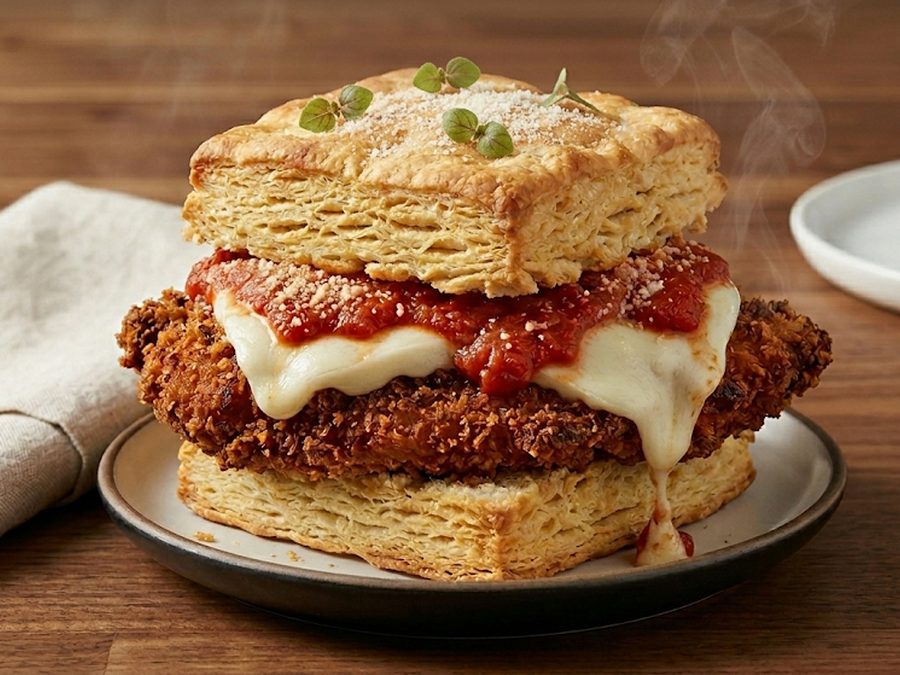
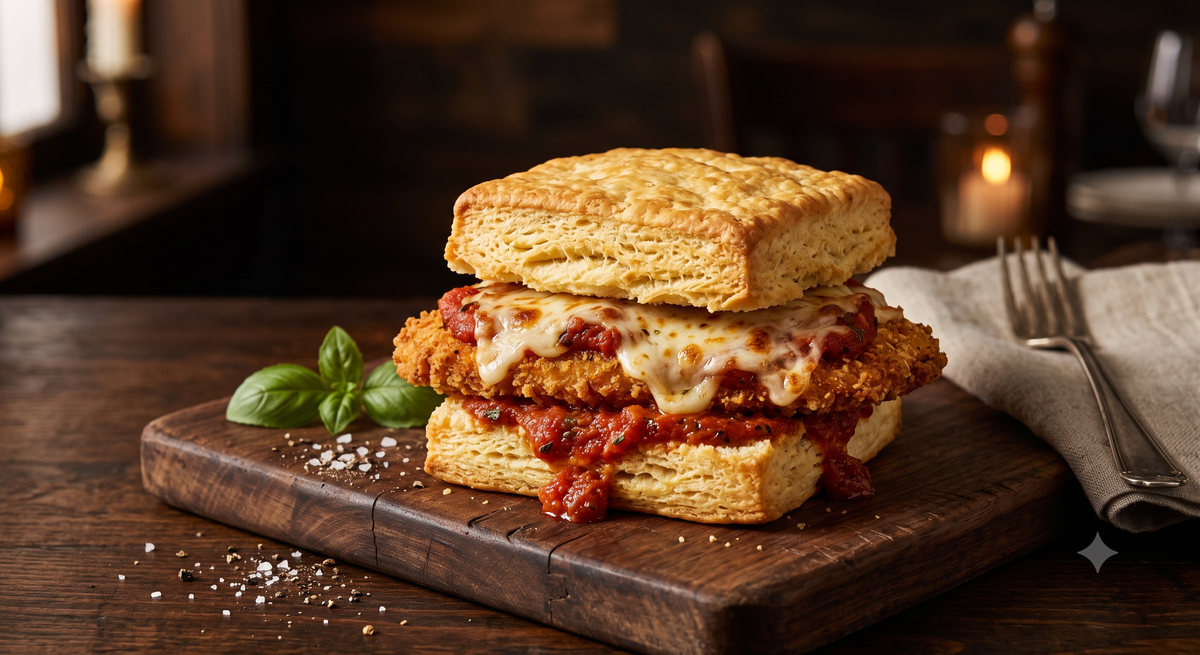
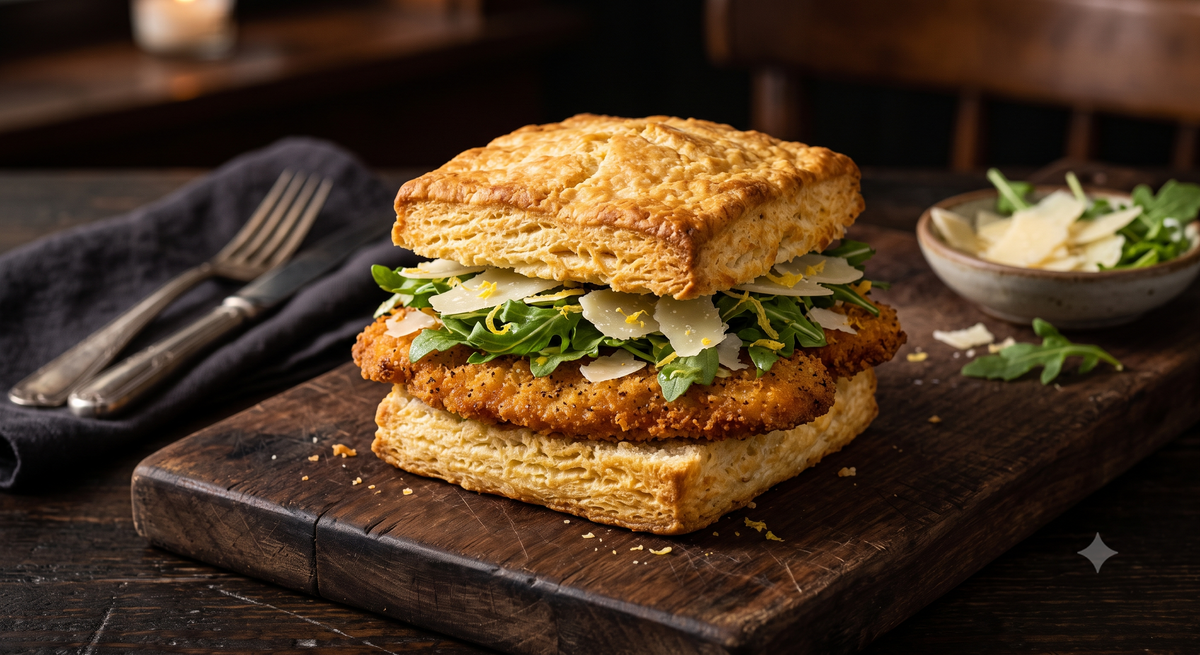
Milanese is chicken parm's more restrained cousin. No sauce, no melted blanket of cheese, nothing to hide behind. A cutlet pounded thin enough to see light through, breaded, fried until it shatters, and finished with lemon and a pile of dressed arugula. On a District Biscuit it becomes the most elegant handheld in the Studio.
Because there is no sauce, the moisture math changes completely. The threat here is not sogginess from below but a build that reads dry, and this is exactly where a laminated butter biscuit outperforms a roll. The District Biscuit's flaky layers carry fat and tenderness of their own, so the sandwich stays rich against a cutlet that is deliberately lean. The crisp edges then run parallel to the shattered breading, which gives you two crunches in the same register rather than crunch fighting softness.
That is the culinary canvas showing restraint. Lemon, salt, peppery arugula, hot crisp chicken, buttery layers. Twenty of the thirty minutes are pounding and breading, and none of it is difficult.
Why you'll love it
- Restaurant elegance from four ingredients and a skillet.
- No sauce means nothing can go soggy, and the biscuit supplies the richness instead.
- Pounding the cutlet thin means it cooks in under five minutes total.
- Arugula dressed in lemon does the work a sauce would, with none of the weight.
- Eats beautifully at room temperature, which makes it a strong picnic build.
Ingredients
- 4 District Biscuits, warmed and split
- 4 boneless skinless chicken breasts, pounded to 1/4 inch
- 1.5 cups fine dry breadcrumbs mixed with 1/2 cup grated parmesan
- 2 large eggs, beaten with 1 tbsp water
- 1/2 cup all-purpose flour
- 4 cups baby arugula
- 2 lemons, one juiced and one cut into wedges
- 3 tbsp extra virgin olive oil for the salad
- 1/2 cup neutral oil for frying
- Shaved parmesan, salt, and black pepper
How to build it
-
1
Place each chicken breast between two sheets of plastic and pound it to an even quarter inch, working from the center outward so it thins without tearing.
-
2
Set up three dishes: seasoned flour, beaten egg, then the breadcrumb and parmesan mixture.
-
3
Dredge each cutlet in flour and shake it off, dip fully in egg, then press hard into the breadcrumbs so the coating bonds, and rest them on a rack 10 minutes.
-
4
Warm the District Biscuits in a 350F oven for 5 minutes and split them so the layers are open.
-
5
Heat the neutral oil in a wide skillet over medium-high until a breadcrumb sizzles immediately on contact.
-
6
Fry the cutlets 2 minutes per side until deep golden and shattering-crisp, then drain them on a wire rack and salt them the moment they come out.
-
7
Toss the arugula with the olive oil, the juice of one lemon, salt, and pepper, dressing it lightly so it stays perky rather than wilting.
-
8
Lay a cutlet on each biscuit bottom, squeeze lemon over it, pile the dressed arugula on top with shaved parmesan, cap, and serve immediately with lemon wedges.
Pro tips & swaps
- Pound to a genuine quarter inch. Thickness is the whole difference between Milanese and a generic breaded cutlet.
- Salt the cutlets the second they leave the oil. Salt adheres to hot fried surfaces and slides off cool ones.
- Use fine dry breadcrumbs, not panko. Milanese wants a thin shattering crust, not a thick craggy one.
- Dress the arugula at the last possible moment. Lemon wilts it within about four minutes.
- Swap chicken for pork loin cutlets or thin veal, both of which are traditional and cook in the same time.
Put this on your menu
District Biscuit ships frozen, 60 biscuits to a case, and bakes from frozen in 22 to 24 minutes. Order it through US Foods, Baldor, Omaha Beef Co., MDI or Saval Foodservice.
Frequently asked questions
Can I make the Milanese Biscuit ahead of time?
Pound and bread the cutlets up to 24 hours ahead and keep them on a rack in the fridge, which dries the coating slightly and improves the crust. Fry to order, dress the arugula at the last minute, and assemble on freshly warmed District Biscuits.
What's the best biscuit to use for a breaded cutlet sandwich?
A flaky, butter-laminated biscuit like a District Biscuit is ideal because there is no sauce in this build. The biscuit supplies the richness, and its crisp edges match the shattered breading instead of contrasting against it.
Can I substitute the chicken in this recipe?
Yes. Thin pork loin cutlets and veal are both traditional, and breaded eggplant slices make an excellent vegetarian version with the same timing.
Is there a gluten-free or vegetarian version of the Milanese Biscuit?
Vegetarian works well with breaded eggplant. For gluten-free, use gluten-free breadcrumbs and flour, though the District Biscuit is wheat-based, so check with the District Biscuit cafe about gluten-free options.
Why did my breading fall off during frying?
Wet chicken, too much flour, or no rest after breading. Pat the cutlet dry, shake the excess flour off thoroughly, press the crumbs on firmly, and give it ten minutes on a rack before it hits the oil.
What should I serve or drink with a Milanese Biscuit?
More of the same arugula salad, roasted potatoes, or blistered tomatoes. For drinks, Pinot Grigio, Vermentino, or a Northern Italian white all suit the lemon and salt.
How many calories are in a Milanese Biscuit?
A single build lands roughly in the 600 to 720 calorie range, driven by the fried coating. Shallow frying in less oil or baking the breaded cutlet at 425F brings it closer to 490.
How do I store and reheat leftovers?
Store the fried cutlets on a rack in an airtight container for up to 3 days. Re-crisp at 400F for 8 minutes, never the microwave, and dress fresh arugula. Re-crisp the District Biscuit at 350F before rebuilding.
What makes a District Biscuit different from a regular biscuit?
District Biscuits are made with crisp, buttery edges and distinct flaky layers engineered to be a legit sandwich base, not just a side. In an unsauced build like Milanese, that laminated butter is what keeps the sandwich rich rather than dry. It is your culinary canvas, built to carry big flavor from first bite to last.