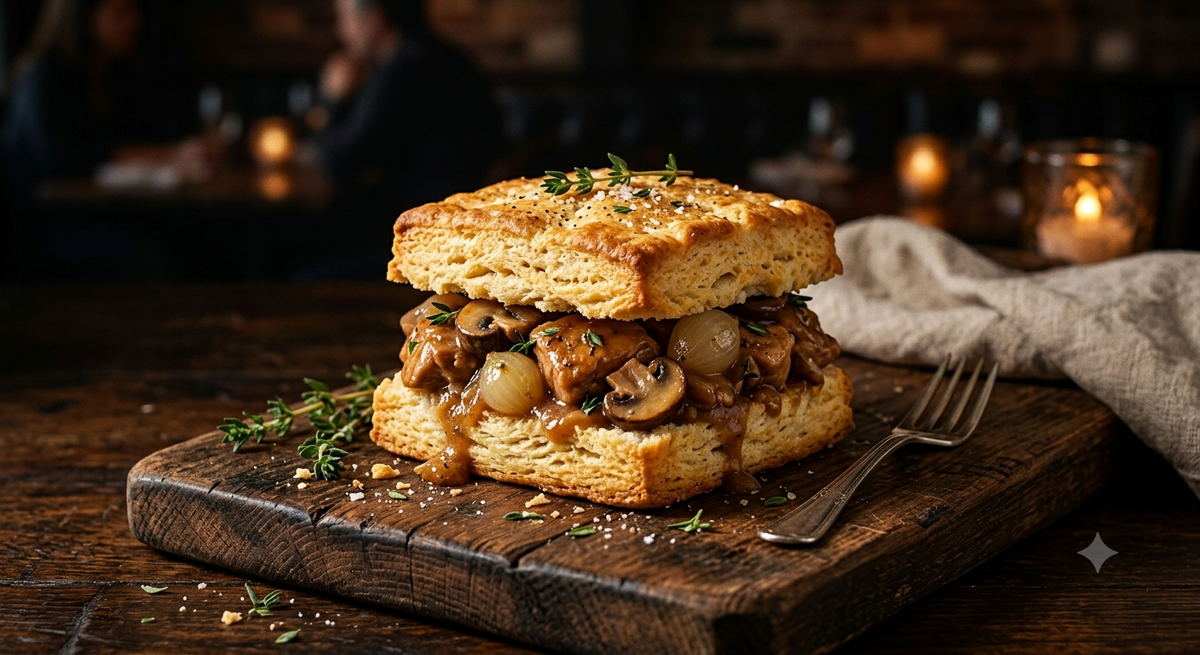
Coq Au Vin
The story
This is the longest cook in the Studio and the only one rated hard, and both of those are honest. Coq au vin is a braise, which means the flavor comes from time and from three or four steps that cannot be skipped without the whole thing turning into chicken in wine sauce, which is not the same dish. Bacon rendered first, chicken browned in the fat, vegetables in after, wine reduced properly, then a long low braise.
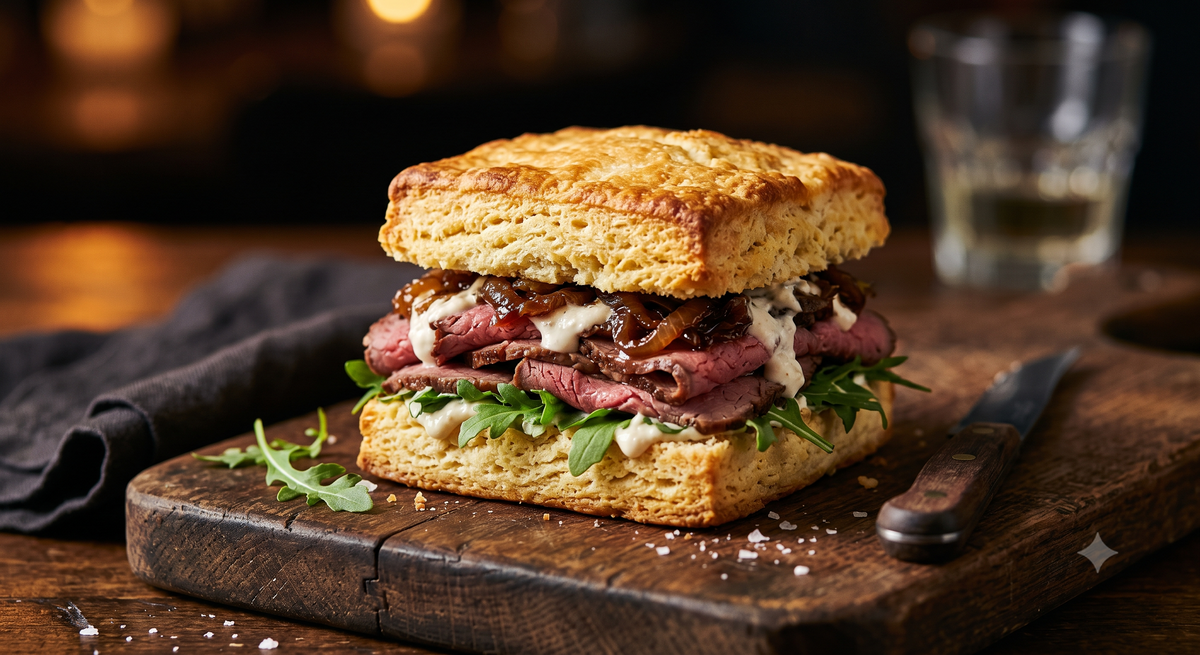
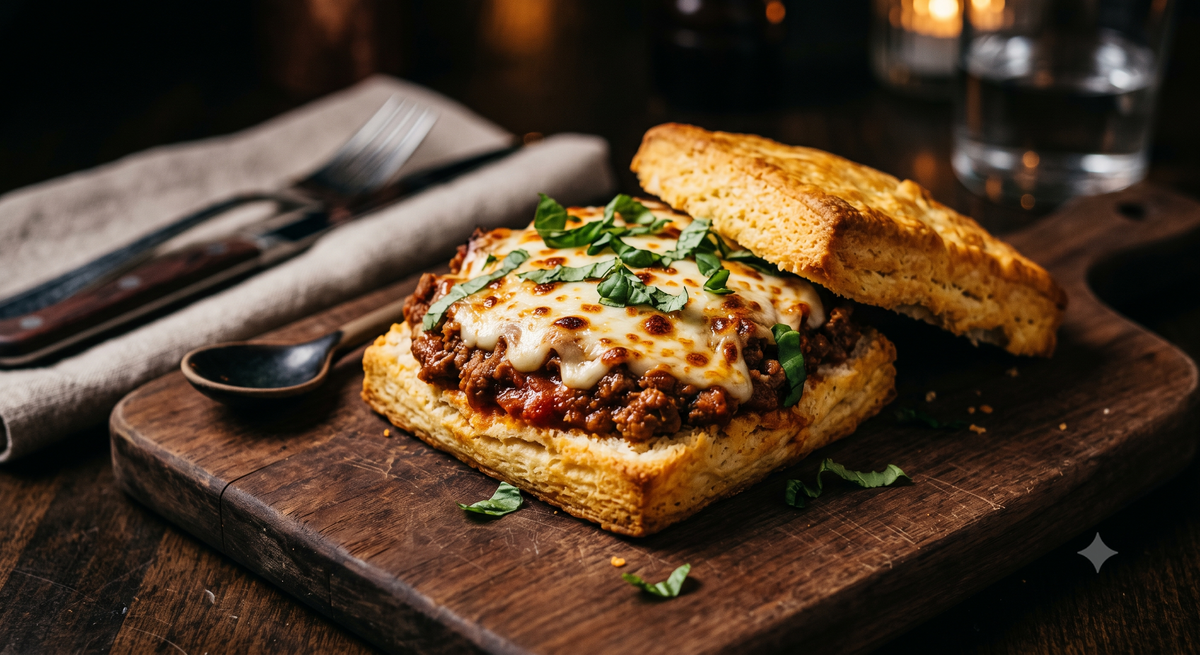
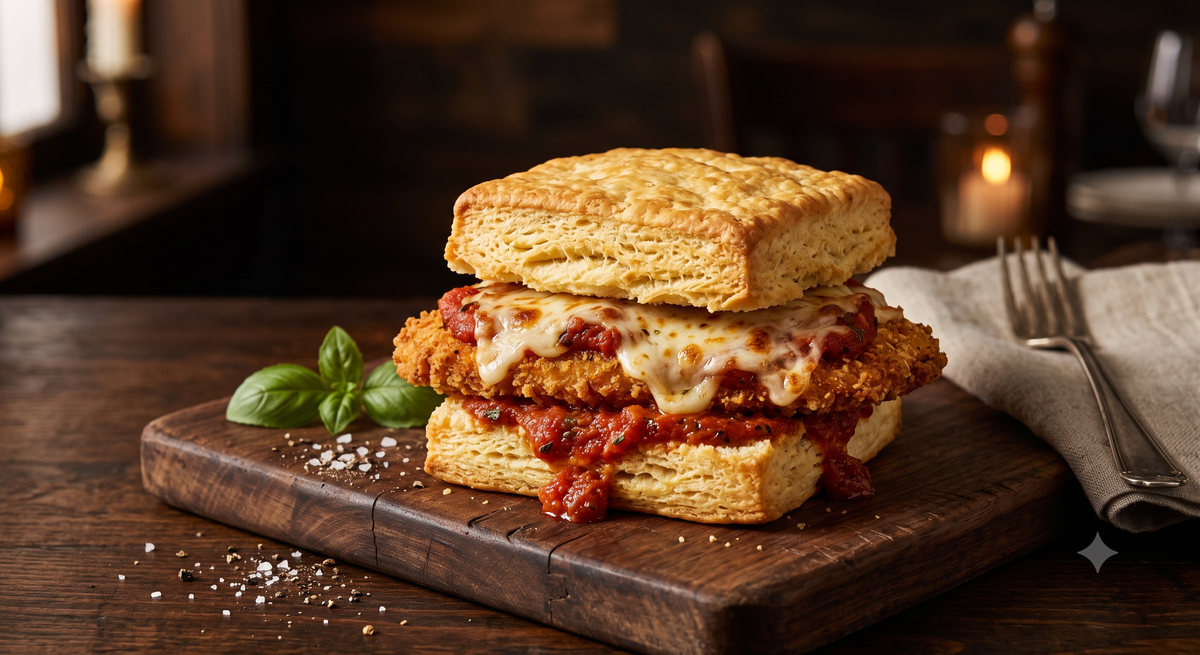
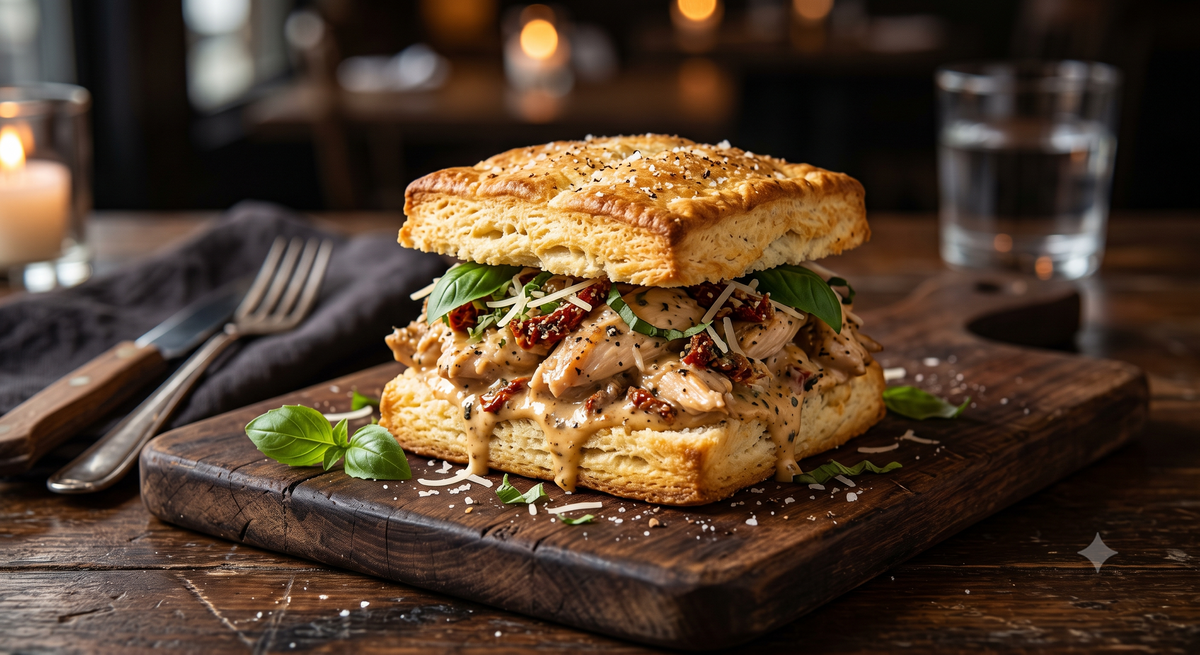
What it produces is a sauce so concentrated it barely pours, and that is precisely what makes the biscuit the right vessel. Traditionally this is served over egg noodles or with bread on the side for mopping, which is an admission that the sauce is the point and the starch is an afterthought. Spooned over a split District Biscuit, the mopping is built in. Crisp buttery edges hold the perimeter while the flaky layers drink the wine sauce down into the sandwich.
That is the culinary canvas on a Sunday when you have the time and want to use it. Bacon, wine, mushroom, thyme, and a biscuit underneath collecting everything that took seventy-five minutes to build.
Why you'll love it
- A genuine French braise with a sauce that no thirty-minute recipe can approximate.
- The District Biscuit builds the mopping directly into the dish instead of serving bread alongside.
- Better on day two, which makes it one of the best make-ahead builds in the Studio.
- Uses an inexpensive cut of chicken and an inexpensive bottle of wine to enormous effect.
- The single most impressive thing here to serve to guests.
Ingredients
- 4 District Biscuits, warmed and split
- 6 bone-in skin-on chicken thighs
- 6 oz bacon or pancetta, cut into lardons
- 1 bottle dry red wine, Burgundy or Pinot Noir
- 10 oz cremini mushrooms, halved
- 1 cup frozen pearl onions, thawed
- 2 carrots and 2 celery stalks, diced
- 3 tbsp flour and 2 tbsp tomato paste
- 4 sprigs thyme, 2 bay leaves, and 4 cloves garlic
- Butter, chopped parsley, salt, and black pepper
How to build it
-
1
Render the bacon lardons in a Dutch oven over medium heat for 8 minutes until crisp, then lift them out and leave every bit of fat behind.
-
2
Pat the chicken thighs bone dry, season them hard, and brown them skin-side down in the bacon fat for 6 minutes without moving them, then 3 minutes on the second side, and set them aside.
-
3
Add the carrots, celery, and pearl onions to the pot and cook 6 minutes until they take on color at the edges.
-
4
Stir in the garlic, tomato paste, and flour and cook 2 minutes, which cooks out the raw flour and deepens the tomato paste.
-
5
Pour in the wine, bring it to a hard boil, and scrape the pot clean, then reduce it by about a third over 8 minutes to drive off the raw alcohol.
-
6
Return the chicken and bacon, add the thyme and bay leaves, cover, and simmer very gently for 35 minutes until the chicken is falling from the bone.
-
7
Meanwhile sear the mushrooms separately in butter until deeply browned, then add them to the pot for the final 5 minutes so they keep their texture.
-
8
Warm the District Biscuits in a 350F oven for 5 minutes, split them, pull the chicken off the bone, pile it on, ladle the sauce over generously, finish with parsley, and serve.
Pro tips & swaps
- Brown the chicken properly, skin down, undisturbed, for a full six minutes. This is the single biggest flavor step and it cannot be rushed.
- Reduce the wine before the chicken goes back in. Skipping this leaves a raw, sharp alcohol edge that no amount of simmering fixes.
- Sear the mushrooms in a separate pan. Added to the braise raw they release water and go gray and slack.
- Use a wine you would drink. Cooking wine is salted and thin and it shows in a sauce this concentrated.
- Make it a day ahead. The sauce tightens and deepens overnight, and this is genuinely better reheated than fresh.
Bring District Biscuits to your business
Put our golden, flaky biscuits to work on your own menu — cater your next event, or bring District Biscuits to your restaurant, hotel, or grocery program.
Frequently asked questions
Can I make the Coq Au Vin Biscuit ahead of time?
You should. Make the braise up to 3 days ahead, since the sauce deepens and the chicken absorbs more flavor overnight. Reheat gently on the stove and assemble on freshly warmed District Biscuits.
What's the best biscuit to use for a braise?
A sturdy, flaky biscuit with crisp edges, like a District Biscuit, is ideal because a braise sauce is the whole point and it needs somewhere to go. Egg noodles absorb blandly, while the District Biscuit's buttery layers take the sauce in and keep their structure.
Can I substitute the chicken in this recipe?
Bone-in thighs are strongly preferred because the bones and skin build the body of the sauce. Boneless thighs work with a shorter 20-minute braise, but you will lose some richness. Breast meat is not recommended for a braise this long.
Is there a gluten-free or vegetarian version of the Coq Au Vin Biscuit?
A mushroom-forward version using king oyster and cremini instead of chicken, with vegetable stock and no bacon, is genuinely good. For gluten-free, thicken with cornstarch instead of flour, though the District Biscuit is wheat-based, so check with the District Biscuit cafe about options.
What wine should I use for coq au vin?
A dry red with decent acidity and no heavy oak. Burgundy is traditional, and any Pinot Noir, Gamay, or inexpensive Cotes du Rhone works. Avoid cooking wine, which is salted, and avoid anything sweet or heavily oaked.
What should I serve or drink with a Coq Au Vin Biscuit?
Buttered green beans, a sharp green salad, or roasted potatoes. For drinks, serve the same wine you cooked with, which is the traditional and correct answer.
How many calories are in a Coq Au Vin Biscuit?
A single build lands roughly in the 680 to 820 calorie range, driven by the bacon, skin-on thighs, and reduced sauce. Removing the chicken skin after browning and cutting the bacon to 4 oz brings it near 580.
How do I store and reheat leftovers?
Store the braise in an airtight container for up to 4 days or freeze for 3 months. Reheat gently on the stove, never at a hard boil, and re-crisp the District Biscuit at 350F before rebuilding.
What makes a District Biscuit different from a regular biscuit?
District Biscuits are made with crisp, buttery edges and distinct flaky layers engineered to be a legit sandwich base, not just a side. That structure is why they hold up under a heavy braise sauce where ordinary bread dissolves. It is your culinary canvas, built to carry big flavor from first bite to last.