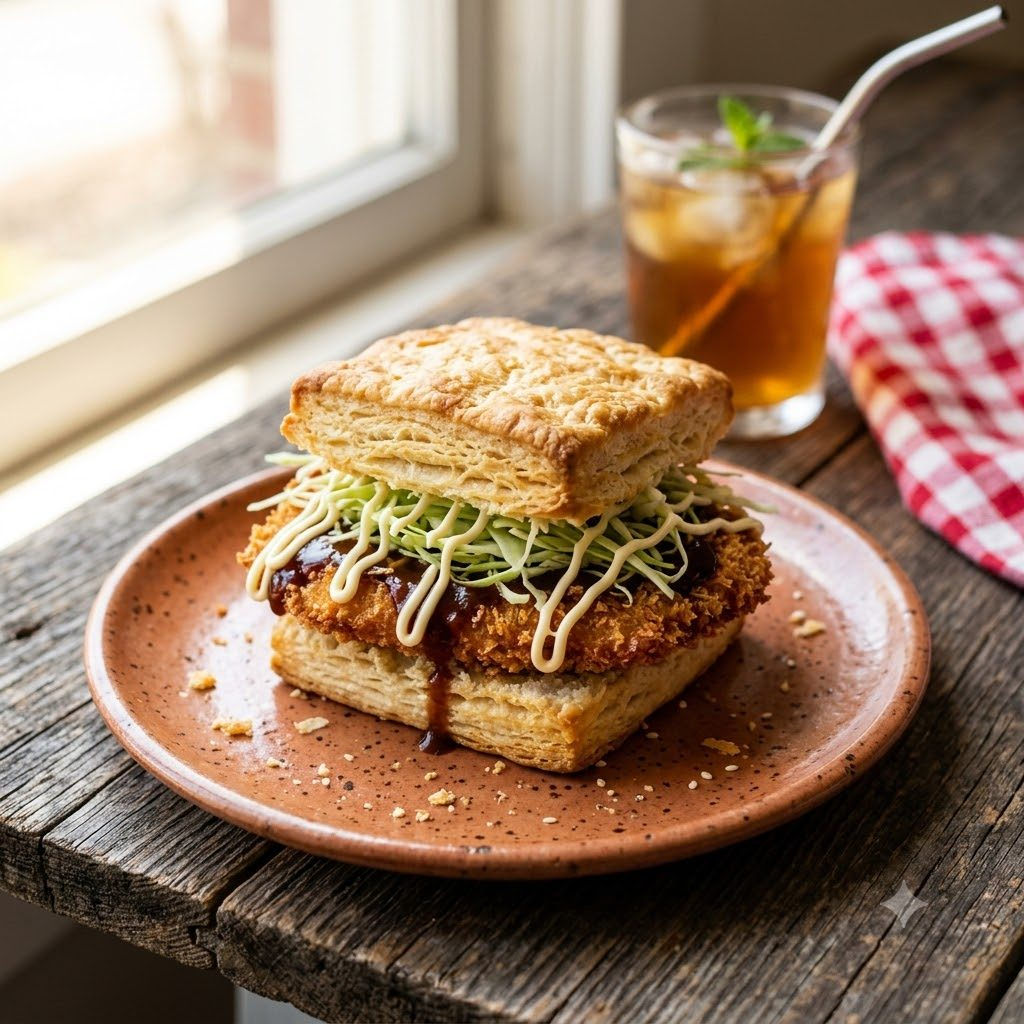
Katsu Biscuit
The story
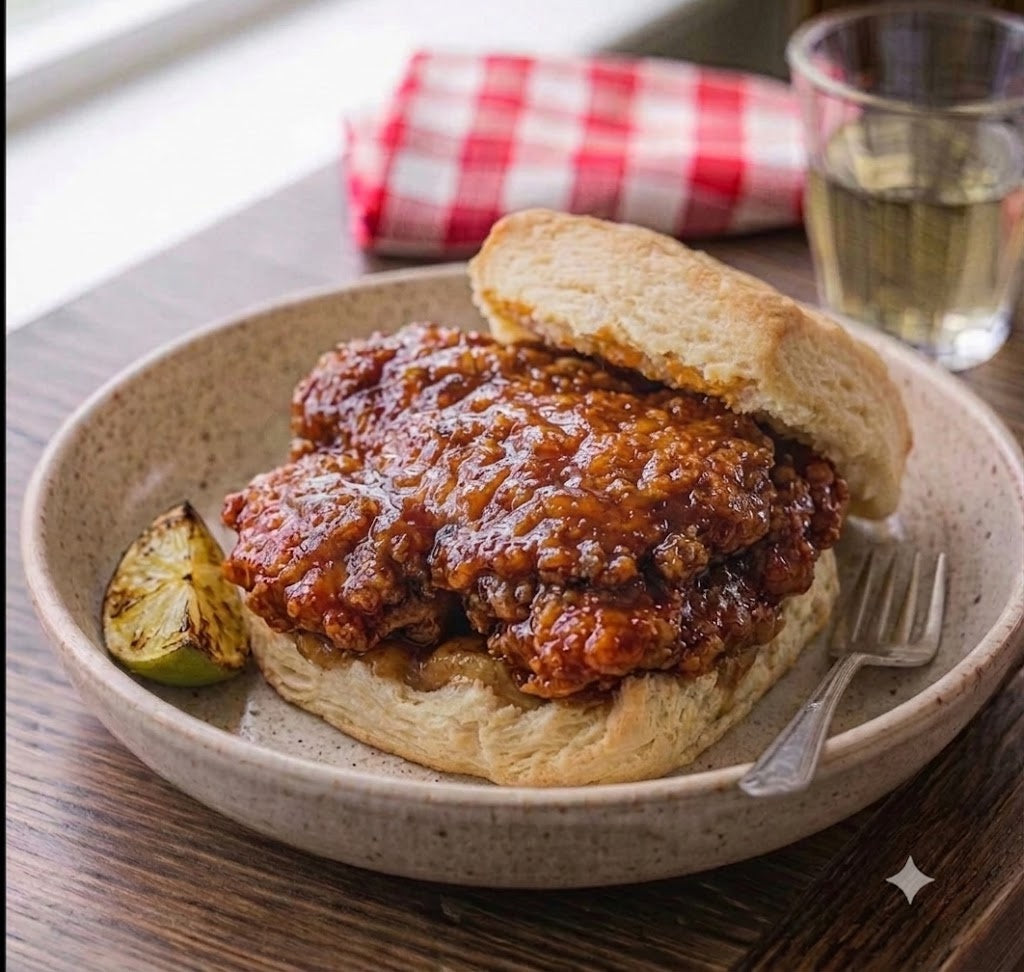
Some sandwiches whisper. The Katsu Biscuit kicks the door in. This is Tokyo diner energy dropped smack in the middle of Alexandria: a panko-crusted pork cutlet fried until it crackles, lacquered in dark, fruity tonkatsu sauce, piled with cool shredded cabbage, and finished with a zigzag of Kewpie mayo that no other mayo can touch.
Here is the thing every katsu sando learns the hard way: soft milk bread is a beautiful trap. One drip of sauce and it surrenders. A muffin fares even worse. The District Biscuit refuses to play along. Those crisp, buttery edges and flaky, laminated layers act like architecture, not a sponge, holding tonkatsu and Kewpie right where you want them while staying golden and structural to the very last bite.
This is your culinary canvas at lunch and dinner both. Crunch on crunch on crunch: the shatter of the panko, the flake of the biscuit, the fresh snap of cabbage. Build one, hold it up to the light, and understand why we do not do soggy around here.
Why you'll love it
- Maximum crunch: crackling panko crust meets shatteringly flaky biscuit for texture in every bite.
- The biscuit holds the line where bread goes to mush, keeping tonkatsu and Kewpie exactly in place.
- Sweet-savory-tangy balance from dark tonkatsu sauce and umami-rich Kewpie mayo.
- Fast enough for a weeknight dinner, impressive enough to serve to guests.
- Endlessly riffable, your canvas for chicken katsu, extra chili crisp, or a slice of American cheese.
Ingredients
- 4 District Biscuits, warmed and split
- 4 boneless pork loin cutlets (about 4-5 oz each), pounded to 1/2 inch
- 1 cup panko breadcrumbs
- 1/2 cup all-purpose flour
- 2 large eggs, beaten
- 2 cups shredded green cabbage
- 1/2 cup tonkatsu sauce (store-bought or homemade)
- 1/3 cup Kewpie mayonnaise
- Neutral oil for frying (about 1 cup)
- Salt and black pepper to taste
How to build it
-
1
Warm the District Biscuits in a 300F oven for 5 minutes, then split them horizontally and set aside crisp-side up.
-
2
Season the pork cutlets with salt and pepper, then set up a breading station: flour, beaten eggs, and panko in three shallow dishes.
-
3
Dredge each cutlet in flour, dip in egg, then press firmly into panko to coat completely.
-
4
Heat 1/2 inch of neutral oil in a skillet to 340F and fry the cutlets 2-3 minutes per side until deep golden and shatteringly crisp; drain on a rack.
-
5
Brush the warm katsu generously with tonkatsu sauce so every edge is lacquered.
-
6
Pile shredded cabbage onto the bottom biscuit halves, then top with a sauced cutlet.
-
7
Zigzag Kewpie mayo over the pork, crown with the top biscuit halves, and press gently.
-
8
Serve immediately while the crust is loud, with extra tonkatsu and Kewpie on the side.
Pro tips & swaps
- Pound the cutlets to an even 1/2 inch so they cook fast and stay juicy, no dry corners.
- Keep the oil at 340F, too cool and the panko drinks oil, too hot and it browns before the pork cooks through.
- Swap in chicken thigh cutlets for chicken katsu, or firm tofu slabs for a vegetarian build.
- No Kewpie? Whisk regular mayo with a pinch of sugar and a few drops of rice vinegar to fake that signature tang.
- Fry the cutlets up to an hour ahead and re-crisp in a 400F oven for 5 minutes right before building.
Put this on your menu
District Biscuit ships frozen, 60 biscuits to a case, and bakes from frozen in 22 to 24 minutes. Order it through US Foods, Baldor, Omaha Beef Co., MDI or Saval Foodservice.
Frequently asked questions
Can I make the Katsu Biscuit ahead of time?
You can bread and fry the pork cutlets up to a day ahead and refrigerate them, then re-crisp in a 400F oven for about 5 minutes before building. Assemble the biscuits only when you are ready to eat so the District Biscuit stays crisp and the cabbage stays fresh. A fully built katsu biscuit does not keep well because the sauce will eventually soften even our sturdy base.
What is the best biscuit for a katsu sandwich?
A flaky, buttery biscuit with crisp edges and laminated layers, which is exactly what a District Biscuit delivers. Unlike milk bread or a muffin, it holds up to tonkatsu sauce and Kewpie mayo without turning to mush. That structure is the whole reason this build works.
What can I substitute for tonkatsu sauce?
In a pinch, whisk together Worcestershire sauce, ketchup, a splash of soy sauce, and a little sugar for a quick homemade version. It will not be identical but it nails the sweet, tangy, fruity profile tonkatsu is known for. Bottled tonkatsu, often labeled katsu sauce, is widely available at most grocery stores if you would rather buy it.
Can I make a Katsu Biscuit without Kewpie mayo?
Yes. Kewpie has a richer, tangier flavor thanks to egg yolks and rice vinegar, but you can mimic it by whisking regular mayonnaise with a pinch of sugar and a few drops of rice vinegar. It brings that signature creamy tang that balances the crunchy pork.
Is there a gluten-free or vegetarian version?
For gluten-free, use a gluten-free District Biscuit if available, gluten-free panko, and a gluten-free flour blend, and check that your tonkatsu sauce is certified GF. For vegetarian, swap the pork for thick planks of firm tofu or breaded portobello, breaded and fried the same way. The cabbage, Kewpie, and tonkatsu carry the flavor beautifully either way.
How do I get the katsu crust really crispy?
Use panko rather than regular breadcrumbs, press it on firmly, and fry in oil held steady around 340F. Frying too cool makes the crust greasy, while too hot browns it before the pork cooks. Draining on a wire rack instead of paper towels keeps the bottom from steaming and going soft.
What should I serve or drink with a Katsu Biscuit?
A crisp lager, a dry Japanese-style rice lager, or an ice-cold barley tea all cut through the richness perfectly. On the plate, a quick cucumber sunomono salad, miso soup, or a pile of extra cabbage keeps things fresh. For a heartier dinner, add a scoop of Japanese potato salad.
How many calories are in a Katsu Biscuit?
A single Katsu Biscuit lands roughly in the 550 to 700 calorie range depending on cutlet size and how heavy your hand is with the Kewpie and tonkatsu. The fried pork and buttery biscuit are the main drivers. Treat it as a satisfying centerpiece meal rather than a light bite.
What makes a District Biscuit different from regular biscuits?
District Biscuits are laminated for distinct flaky layers and baked with crisp, buttery edges, so they stay structural under saucy, juicy builds like katsu. That combination of shatter and flake is why bread and muffins go soggy while ours holds firm. It is the culinary canvas the whole Katsu Biscuit is designed around.